
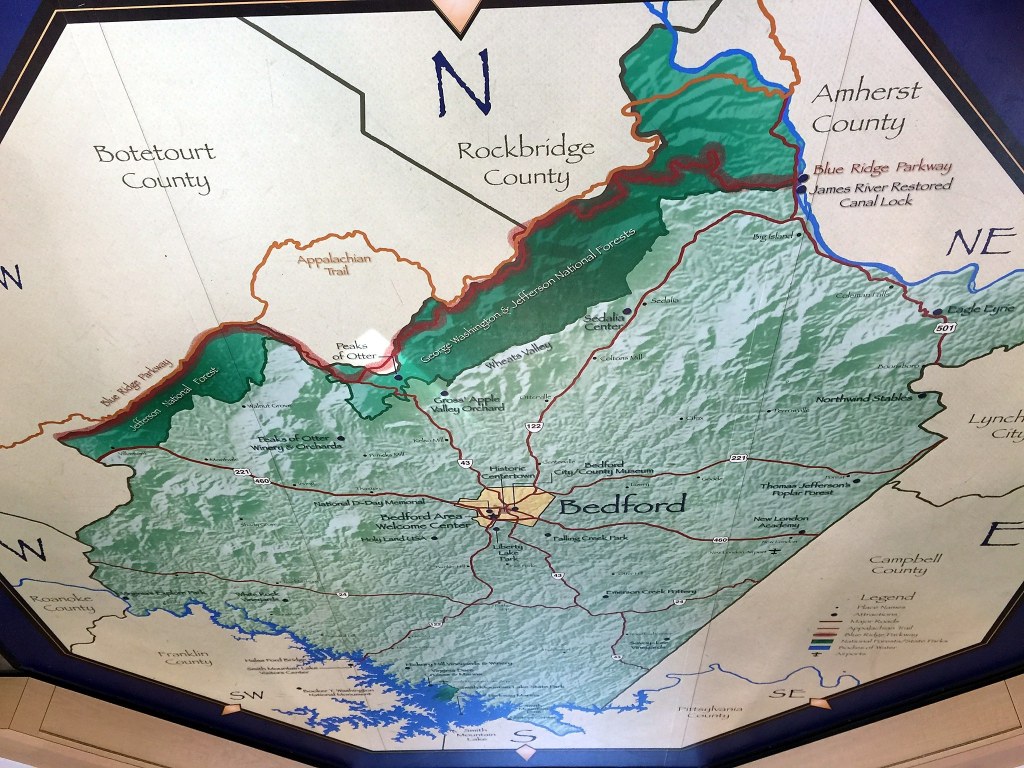
Today is Veterans Day, so it feels like the right time to dig this one out of the photo library. Back on Labor Day weekend in 2015, Katy and I rode down to Bedford, Virginia, to see the National D-Day Memorial. It sits up on a hill at the edge of the Blue Ridge, and it’s one of those places that stay with you long after you leave.
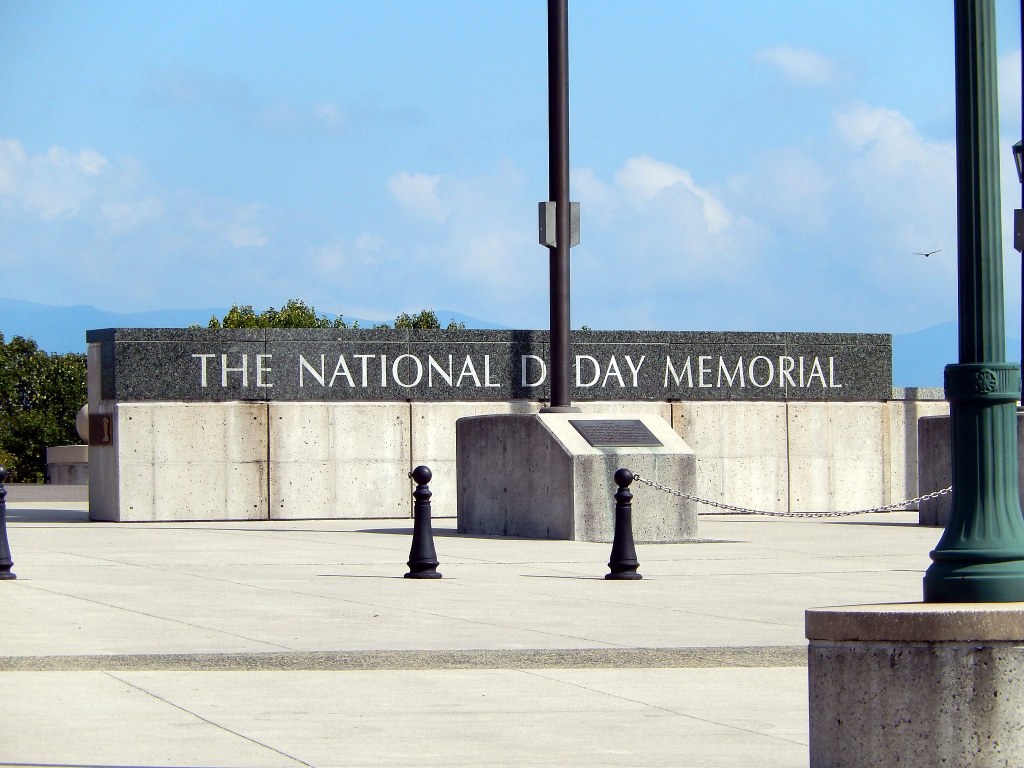
A little history first. The memorial was the dream of Bob Slaughter, a D-Day veteran from Roanoke who landed at Omaha Beach. After the war he started going to reunions and speaking to groups, and he pushed for a national memorial. Congress approved it in 1996, and it opened in 2001.
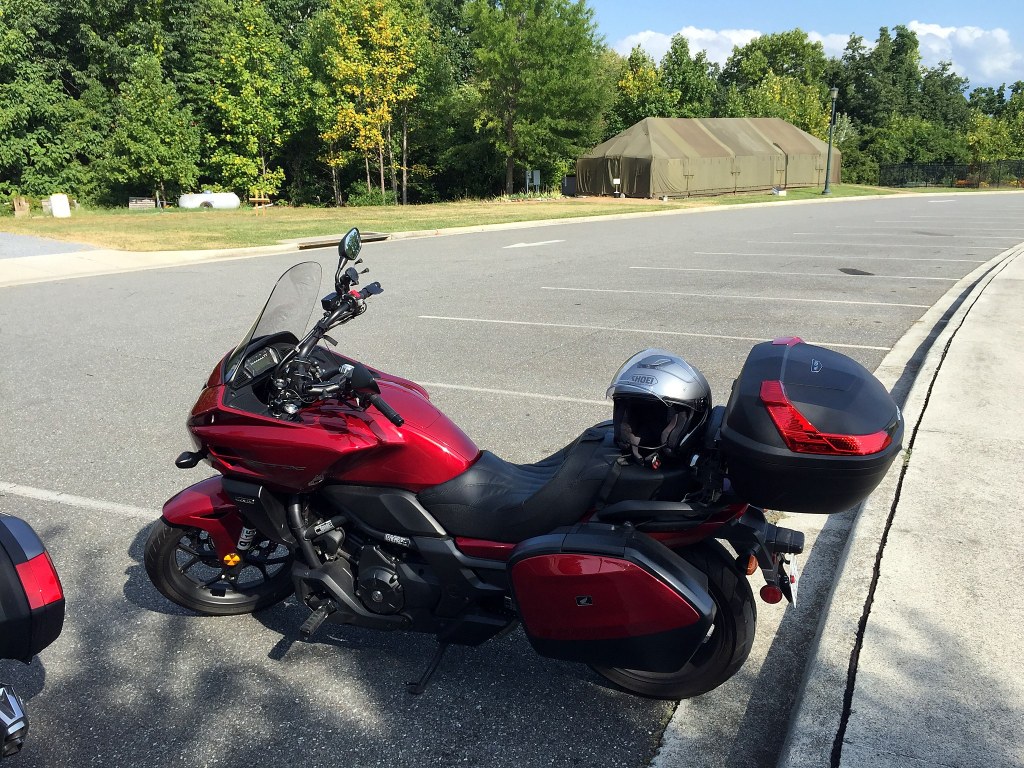
We pulled in on a clear, sunny morning and parked the bikes. Even the parking area sets the mood, with an old canvas Army tent sitting off to the side.
Why Bedford?
A lot of people wonder why a national memorial is in such a small town. Bedford had only about 3,200 people in 1944. Many of its young men served in Company A of the 116th Infantry, a Virginia National Guard unit that landed at Omaha Beach in the first wave. Nineteen of the “Bedford Boys” were killed that morning, and another Bedford man died elsewhere on the beach, bringing the town’s D-Day losses to 20. No other town in America lost more of its people, for its size, on D-Day. That is why Congress chose Bedford.
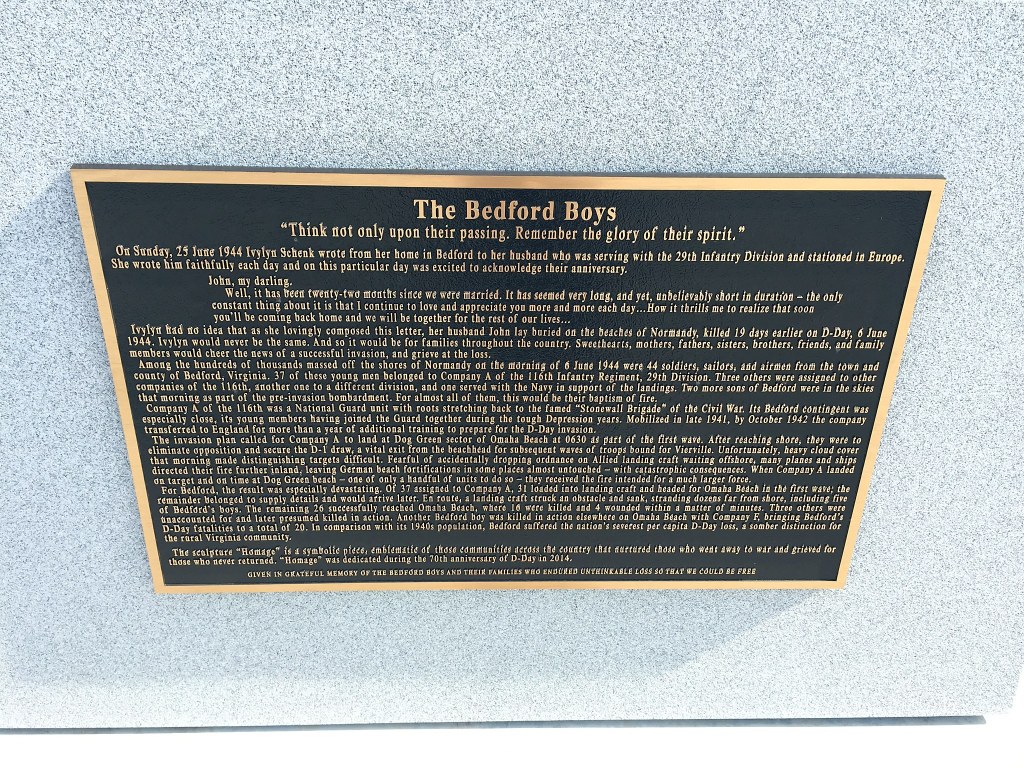
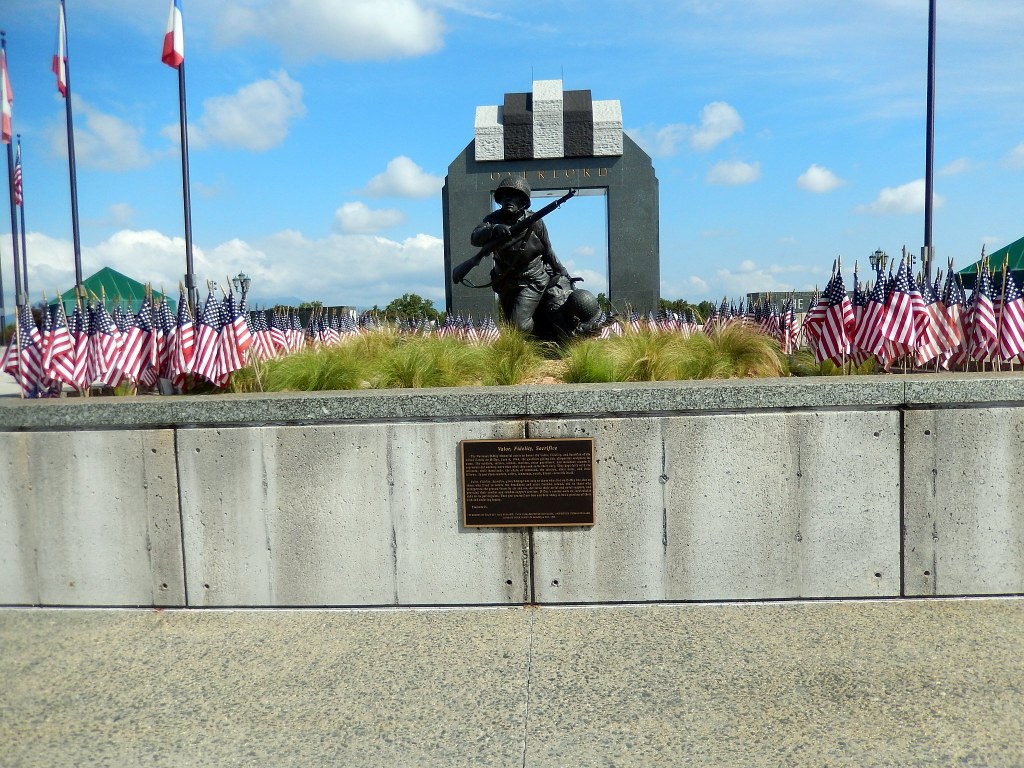
Reading this plaque was tough. It tells the story of a young wife writing a happy anniversary letter to her husband, not knowing he had already been killed on the beach. It puts a face on what all those numbers really mean.
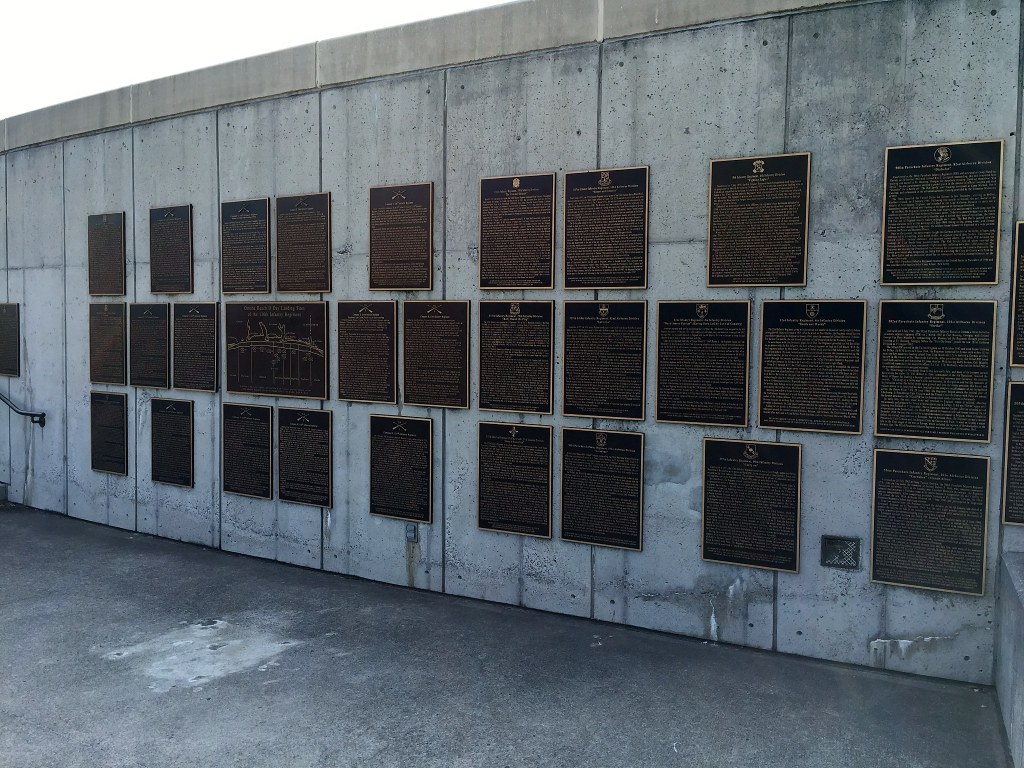
Part 1: The Garden (England and the Planning)
The memorial is laid out to walk you through D-Day in three parts. The first part is Reynolds Garden, a formal English-style garden. It stands for England, where the Allies spent months planning and getting ready for the invasion. From the air, the garden is laid out in the shape of the SHAEF shoulder patch, the insignia of Eisenhower’s headquarters.

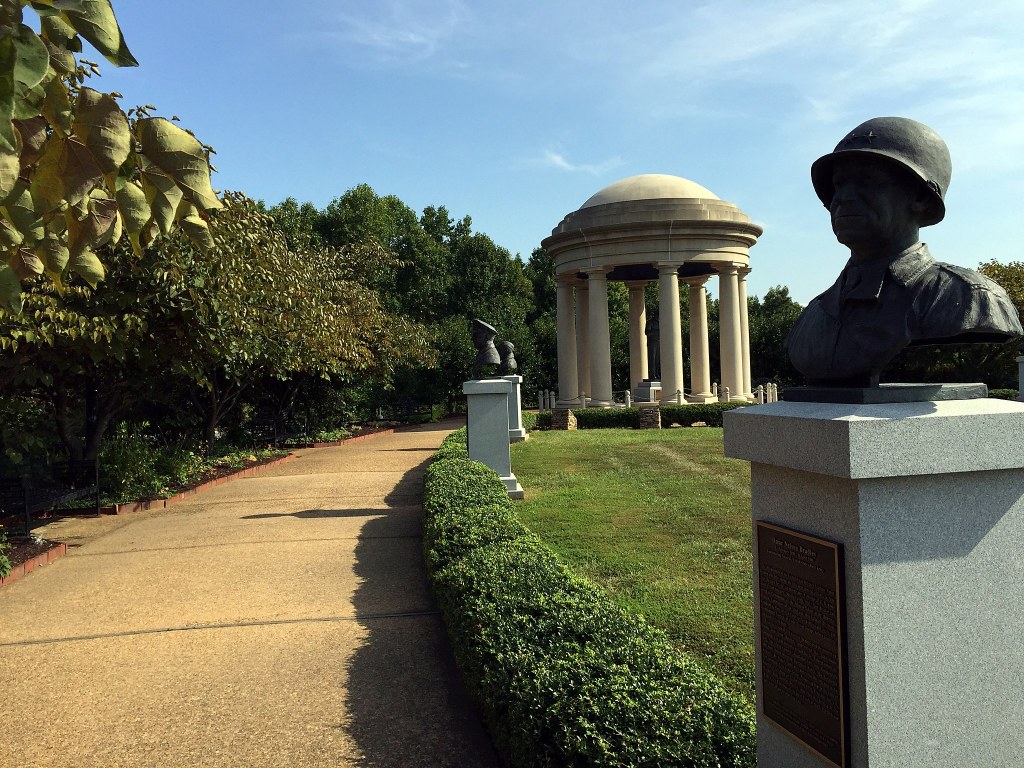
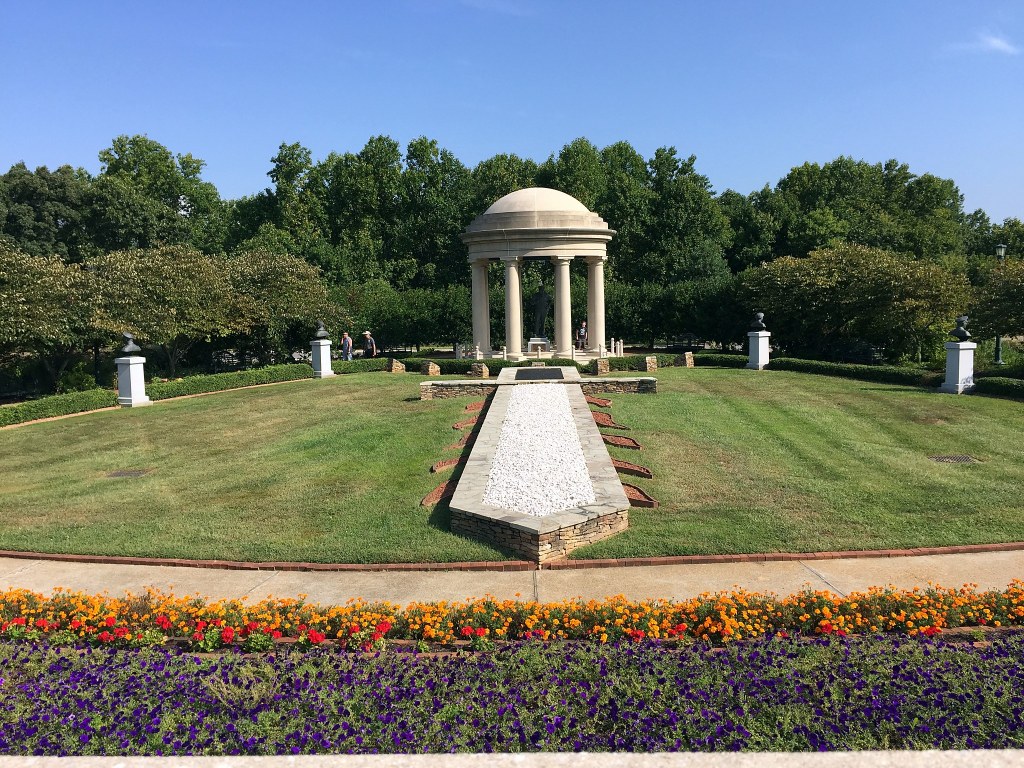
There are six commander busts in all: Tedder, Ramsay, Leigh-Mallory, Montgomery, Bradley and Bedell Smith, standing around Eisenhower the way they served under him. The flowers were in full bloom and the whole garden was very peaceful.
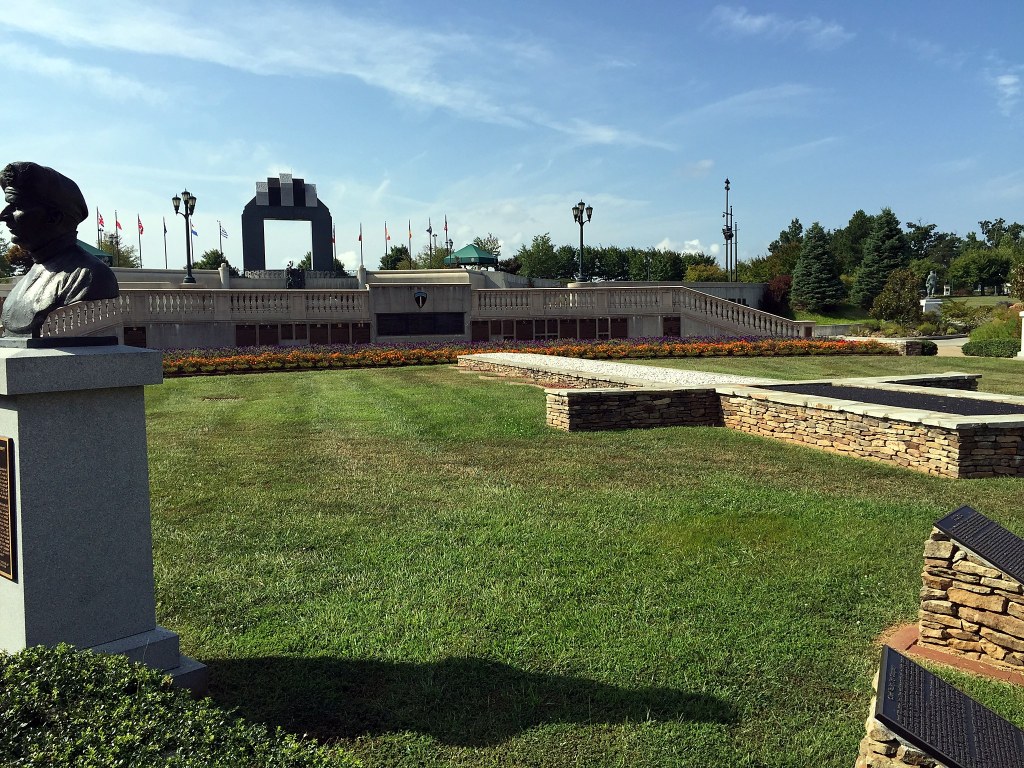
Part 2: The Invasion Pool (The Landing)
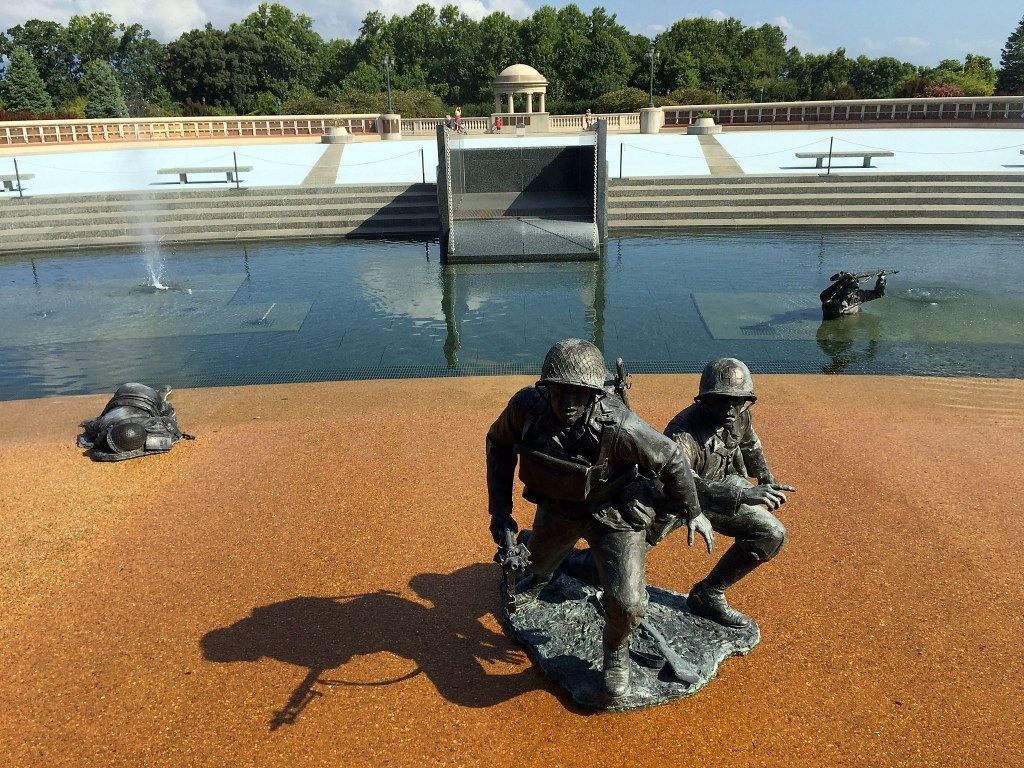
Walk down from the garden and things change fast. The middle of the memorial is a big pool made to look like the beach landing. Its floor is split into five sections for the five invasion beaches: Utah, Omaha, Gold, Juno and Sword. There are steel “hedgehog” obstacles in the water, a granite landing craft, and bronze soldiers coming ashore. Every so often little jets of water shoot up out of the pool, made to look like bullets hitting the water all around the men. We saw it happen while we were standing there, and it’s something else to see in person.
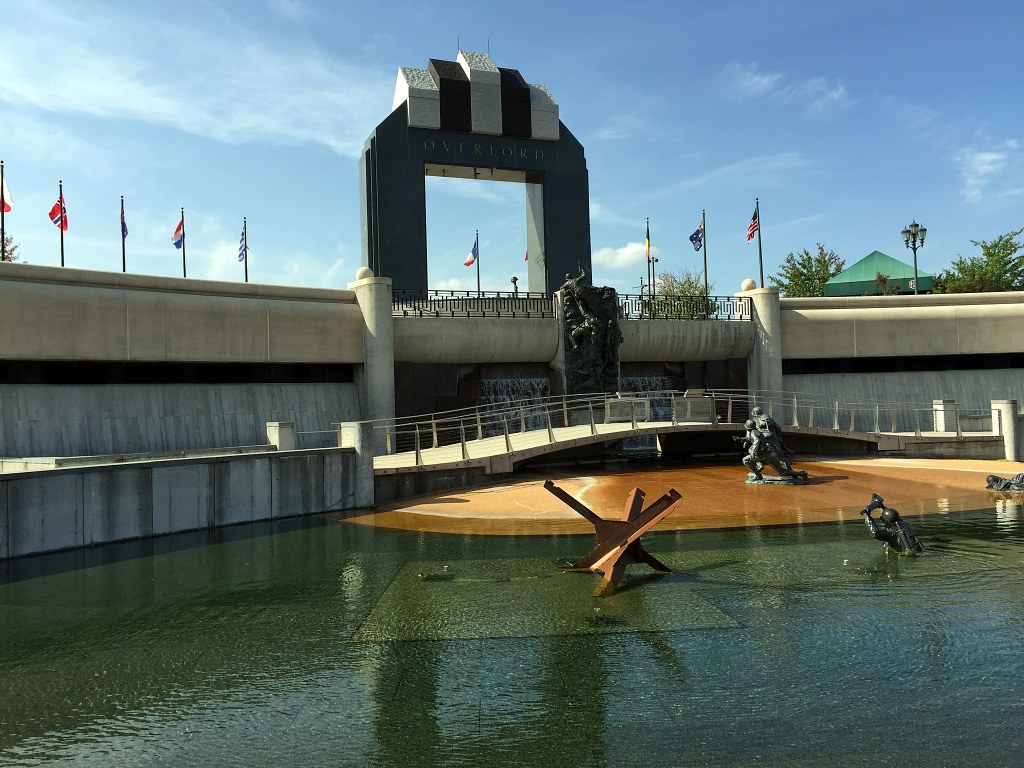
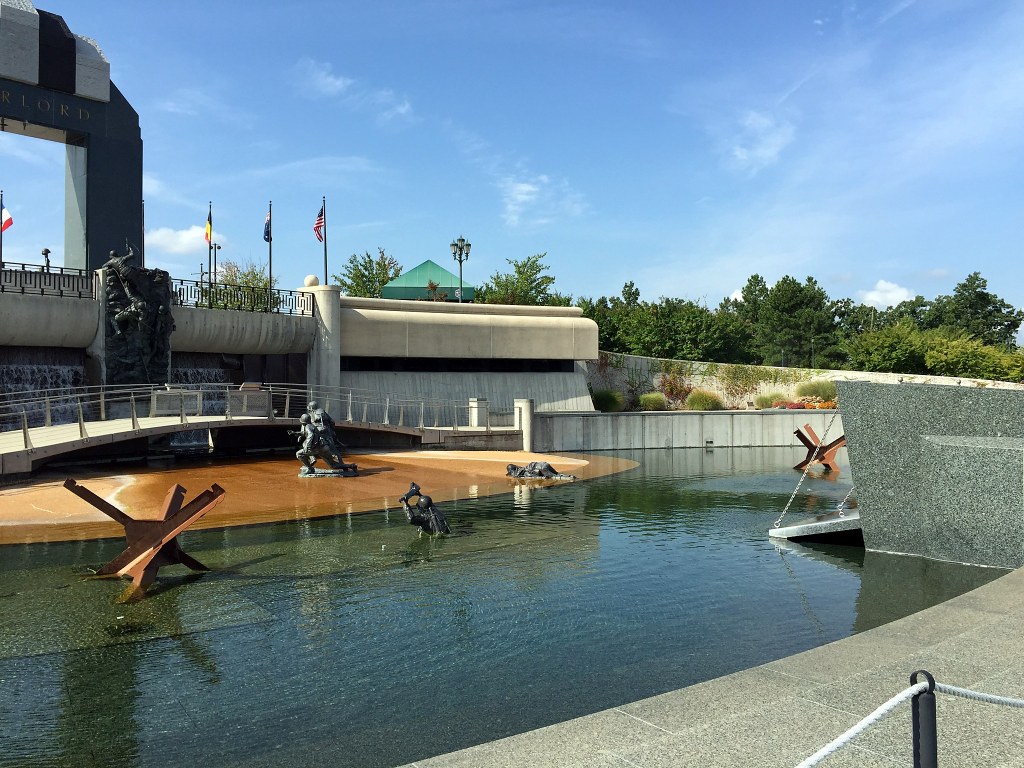
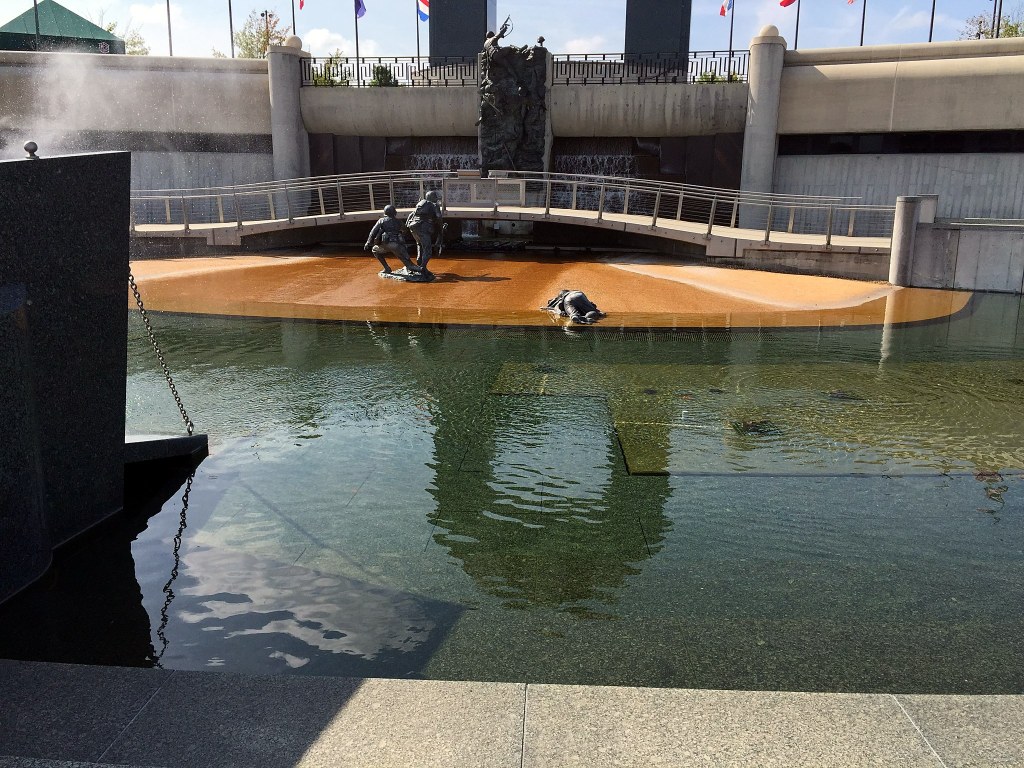
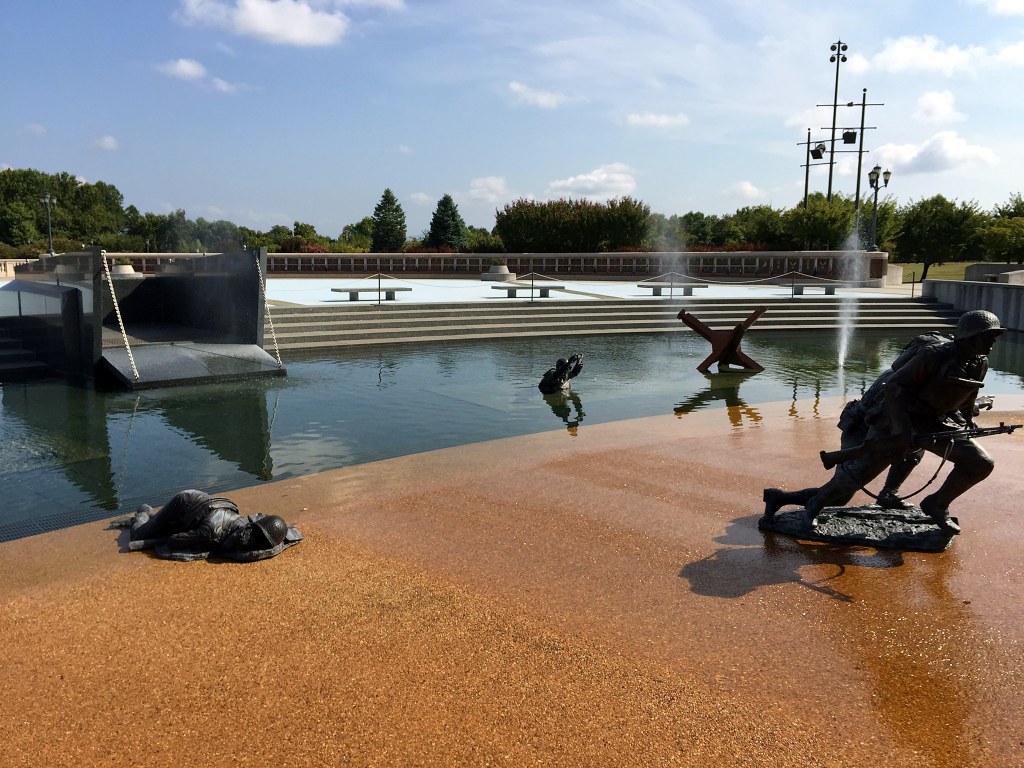
The bronze figures really get to you. Sculptor Jim Brothers made three of them: Through the Surf, a soldier wading in with his rifle held up; Death on Shore, a soldier lying at the water’s edge; and Across the Beach, two men pushing up the sand. It’s quiet there now, but you can’t help thinking about how loud and terrible it must have been.
Part 3: Scaling the Wall and the Overlord Arch (Victory)
Below the arch is a 20-foot bronze relief called Scaling the Wall, also by Jim Brothers. It shows soldiers climbing a cliff on ropes. It looks a lot like the 2nd Ranger Battalion climbing the cliffs at Pointe du Hoc, but it’s meant for everyone who broke through Hitler’s “Fortress Europe” that day.
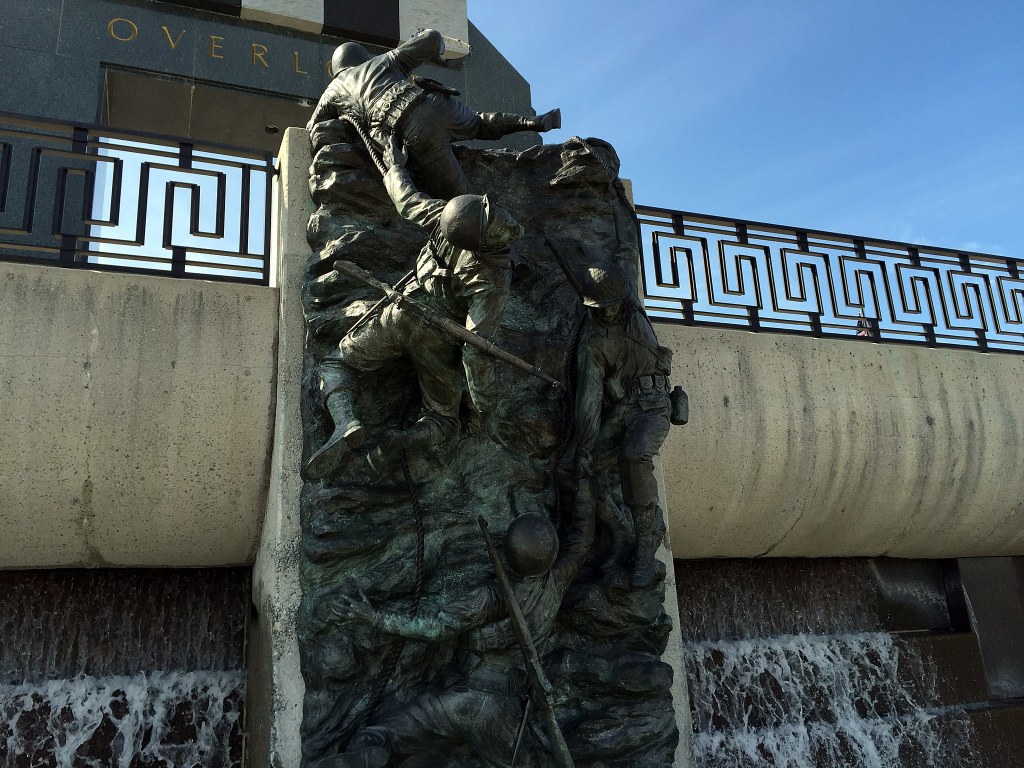
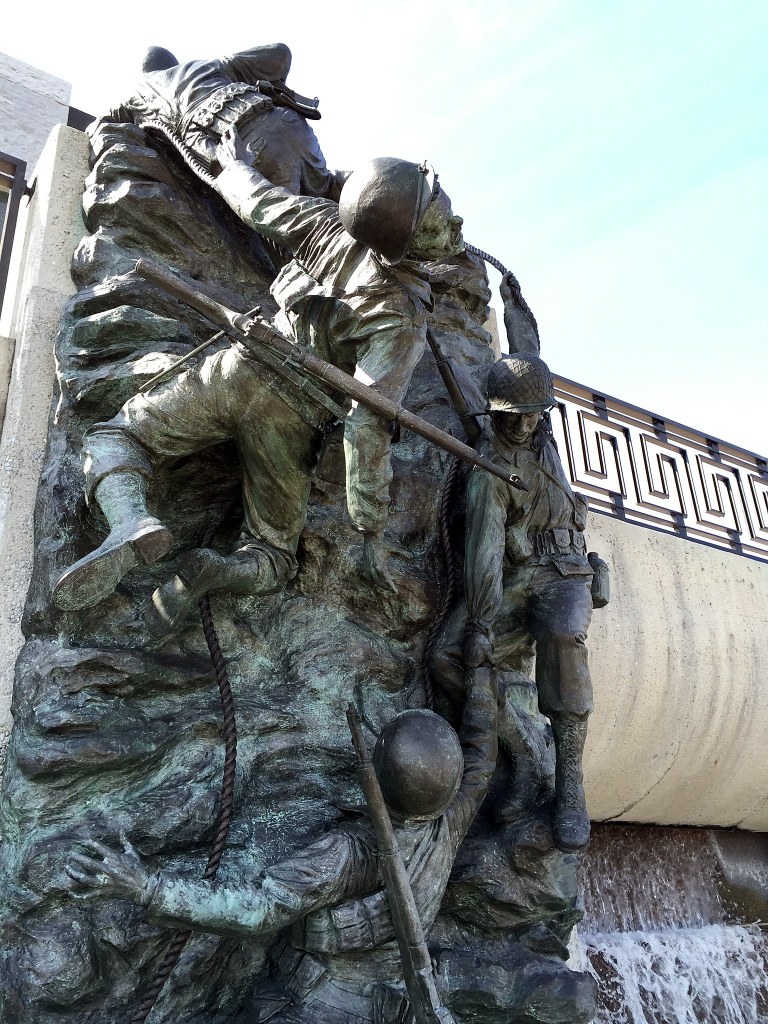
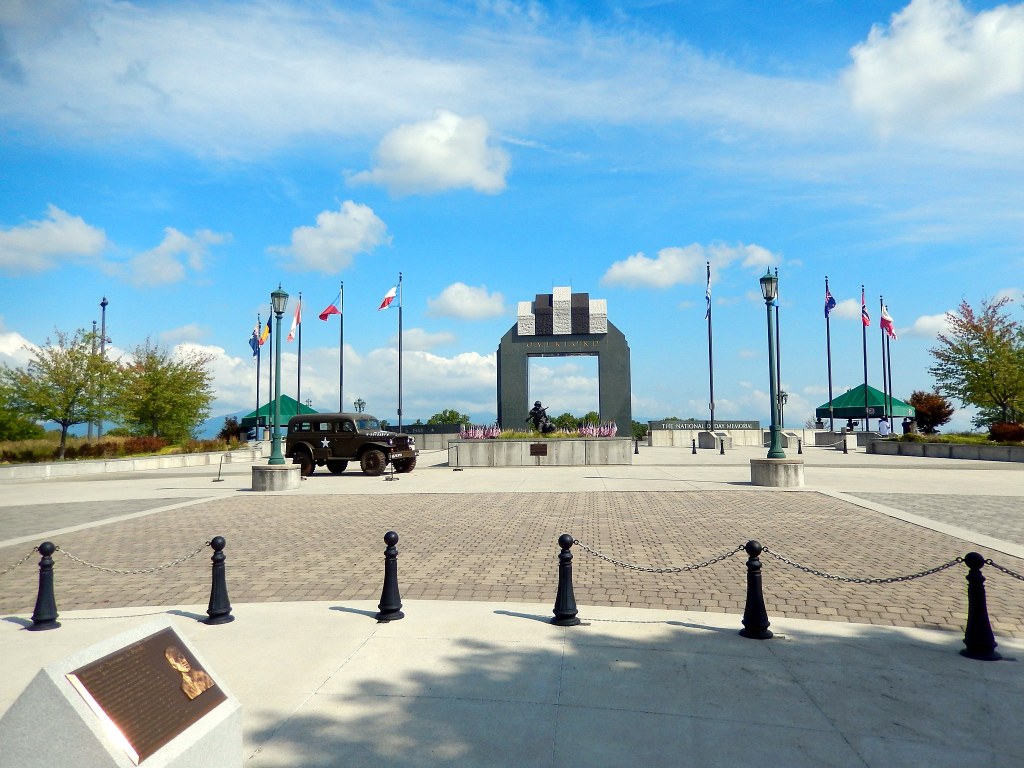
At the top stands the Overlord Arch, named for Operation Overlord, the code name of the invasion. It is 44 feet, 6 inches tall, a nod to the date: 6/6/44. Flags of the Allied nations fly all around it.
If You Go
National D-Day Memorial
3 Overlord Circle, Bedford, VA 24523
The memorial is about 40 minutes east of Roanoke. Plan on a couple of hours to walk it, and take your time reading the plaques. It’s a great ride or drive through Virginia’s Blue Ridge country. Check dday.org for current hours and tickets before you go.
To every veteran reading this: thank you for your service. And to the Bedford Boys and all who landed on June 6, 1944, we remember you.
Want to Learn More? Books Worth Reading
- The Bedford Boys by Alex Kershaw: the true story of the Bedford men of Company A and the families back home.
- The Boys of Pointe du Hoc by Douglas Brinkley: the Army Rangers who climbed the cliffs, the story behind Scaling the Wall.
- D-Day: June 6, 1944 by Stephen E. Ambrose: a classic, readable history of the whole invasion.
As an Amazon Associate we earn from qualifying purchases.


Leave a Reply